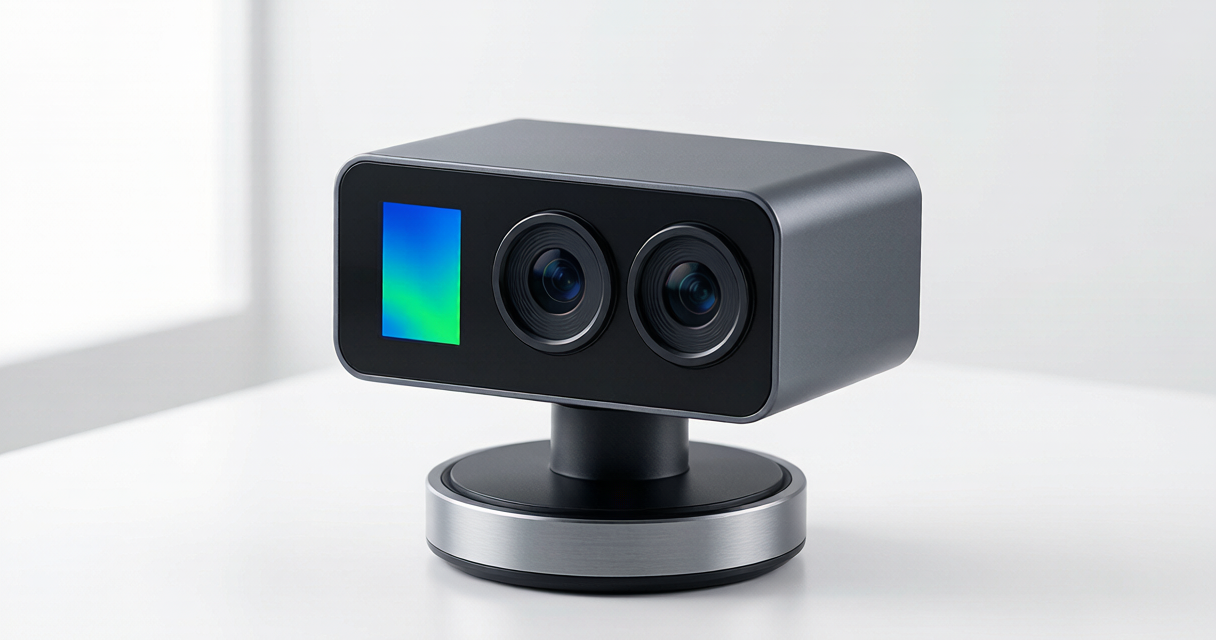
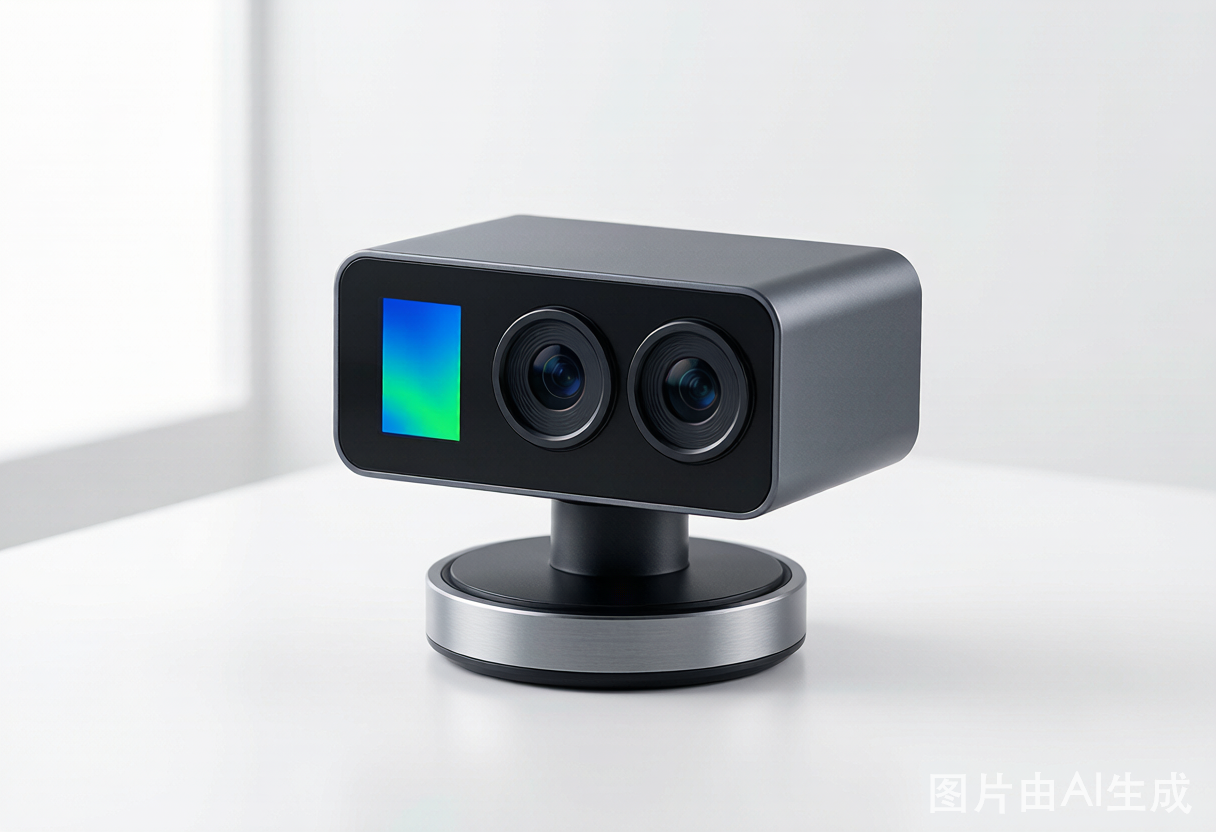
CHICAGO, June 18, 2026 — At Automate 2026, RealSense unveiled the D585 Pro, a next-generation AI-native depth camera that represents a fundamental shift in how robots perceive the world. Powered by a proprietary Gen 5 system-on-chip (SoC), the D585 Pro delivers over 2x better depth quality than previous-generation RealSense cameras and 2.5x better close-range performance than competing solutions.
A New Architecture Built for Physical AI
The D585 Pro is built around a custom Gen 5 SoC that integrates a depth engine, image signal processor (ISP), digital signal processor (DSP), dedicated AI accelerators, and a quad-core ARM processor — all on the camera itself. This means the full depth and image processing pipeline runs on-device, dramatically reducing reliance on host computing resources.
“The D585 Pro is not just an update to what came before; it’s the actualization of the Visual Cortex of Physical AI,” said Nadav Orbach, CEO of RealSense. “For the first time, developers can deploy a single depth camera that operates from under 15 centimeters to more than 10 meters, indoors or outdoors, while gaining new capabilities over time through software updates rather than hardware replacement.”
Key Specifications
- Field of View: 120×100°, optimized for Visual SLAM, navigation, and whole-scene awareness
- Minimum Range: Sub-15cm at full resolution — 2.5x better than the nearest competitor
- Frame Rate: 60 FPS at 1280×960, double the frame rate of 30 FPS class competitors
- Operating Range: 10m+ at optimal accuracy, covering the full AMR navigation envelope
- Durability: IP65 rating as standard on every unit
- Connectivity: GMSL2 + USB-C with hardware sync support
- Environmental: Built-in IR filters for reliable operation in bright outdoor sunlight and low-light indoor environments
Software-Defined Perception
At launch, the D585 Pro ships with on-camera enhanced depth processing and person detection (beta), both running entirely on the Gen 5 SoC without requiring host compute. Planned SDK releases will add Visual-Inertial Odometry (VIO), occupancy grid generation, auto-calibration, and face detection — all delivered as software updates to existing D585 hardware.
This software-defined approach means customers deploy hardware once while continuously expanding functionality over the life of the system — a model that NVIDIA pioneered with Jetson and that RealSense is now bringing to depth cameras.
RealSense Perception Studio
Alongside the D585 Pro, RealSense launched Perception Studio, a beta program offering early access to emerging perception technologies across the entire RealSense ecosystem. Initial capabilities include close-range depth performance extending to under 3cm on the D401 and D405, person detection running on the Gen 5 SoC, and Visual-Inertial Odometry via cuSLAM optimized for RealSense RGB and depth streams.
From Intel Spinout to Independent Innovation
The D585 Pro is the first major product launch since RealSense spun out from Intel in July 2025 with $50 million in funding from Intel Capital and the MediaTek Innovation Fund. The spinout freed RealSense from Intel’s internal product cycle constraints, enabling faster engineering decisions and a sharper focus on robotics perception.
The camera earned RealSense a 2026 RBR50 Robotics Innovation Award and is currently being evaluated by multiple global developers of humanoid robots, AMRs, and robotic arms. Shipments are set to begin in Q1 2027.
Implications for the Depth Camera Market
The D585 Pro targets a specific gap in the market: the $500–$1,500 single-camera perception unit that replaces camera-plus-compute bundles for humanoids, AMRs, and industrial cobots. By moving AI inference to the camera, it saves 20–40 watts of GPU power at the Jetson level and frees Tensor Core cycles for higher-value inference.
This is part of a broader industry trend: compute is moving to the sensor. From UnitX DeteX in manufacturing inspection to Ouster Rev8 in LiDAR, the host processor is increasingly the bottleneck, not the sensor. The D585 Pro extends this thesis to robotics depth perception — and positions RealSense as a key enabler of the next generation of intelligent machines.