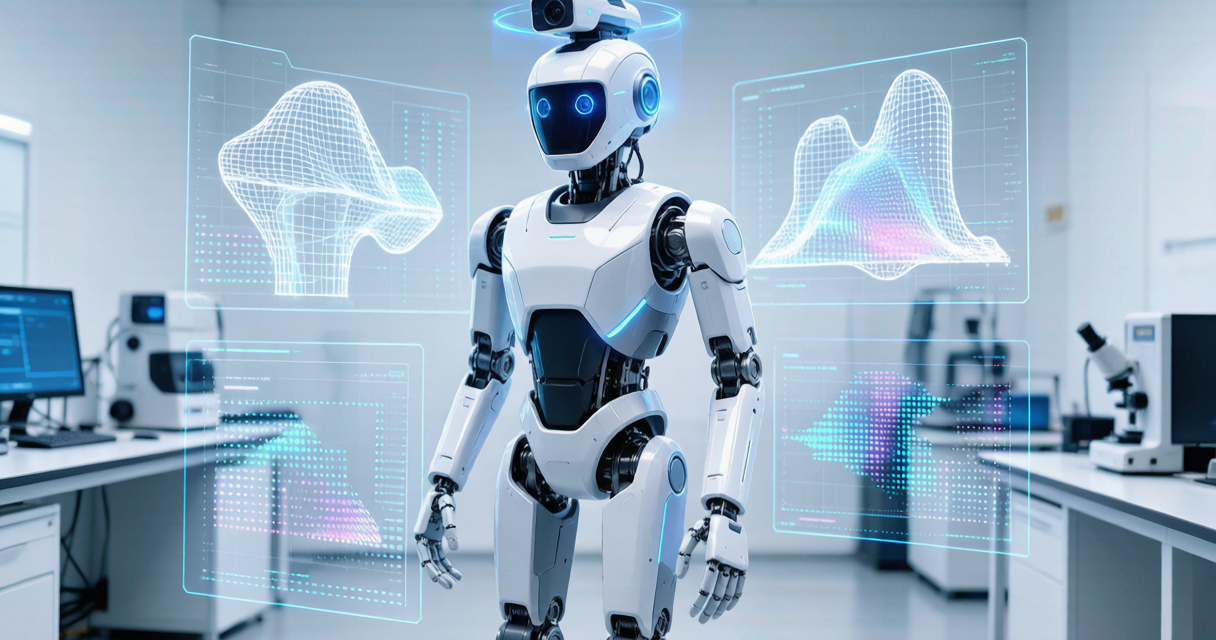
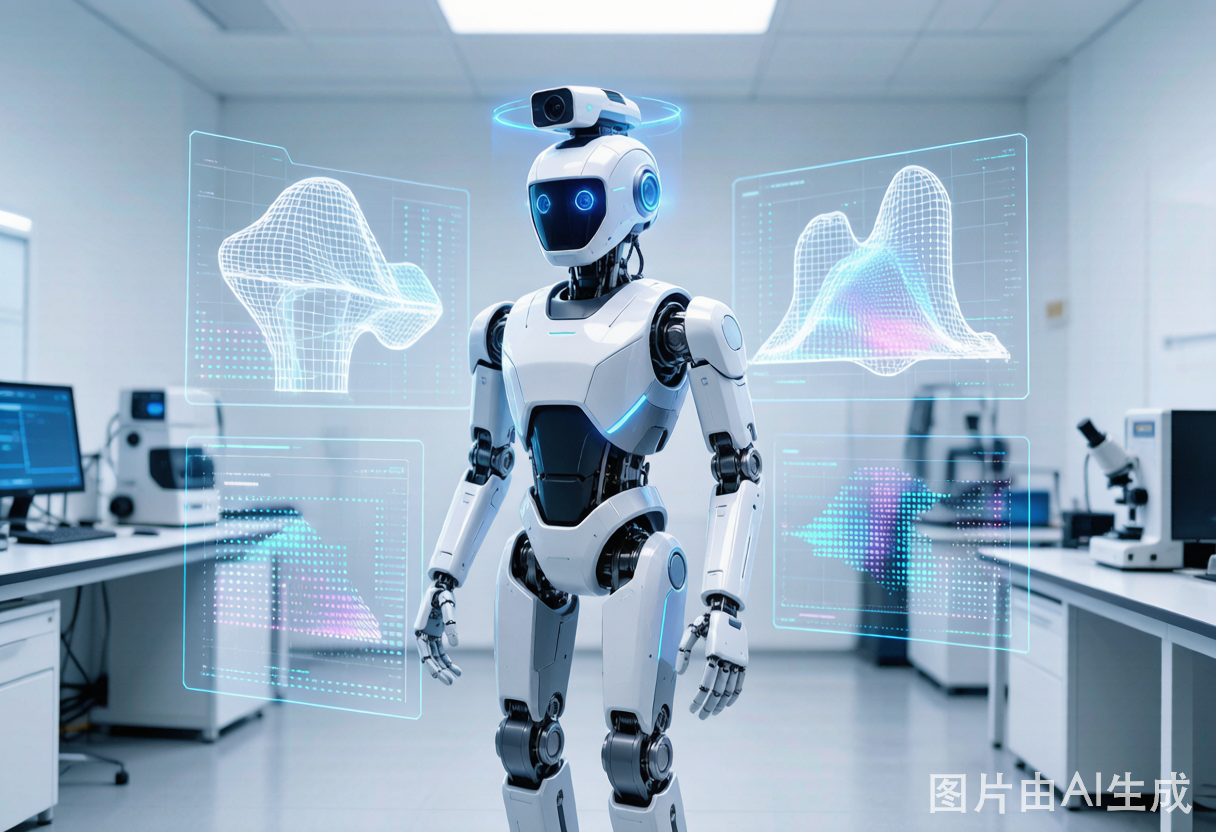
TAIPEI, June 1, 2026 — NVIDIA has announced the Isaac GR00T Reference Humanoid Robot, the first open humanoid robot reference design built on the NVIDIA Jetson Thor platform and the Isaac GR00T open development platform. The design unifies a Unitree H2 Plus humanoid robot body with Sharpa tactile five-finger hands and NVIDIA’s full software stack — giving researchers access to frontier hardware without proprietary lock-in.
“The ChatGPT Moment for Robotics”
“Humanoid robots will bring physical AI to the world’s largest industries, opening a multitrillion-dollar economic opportunity,” said Jensen Huang, founder and CEO of NVIDIA. “The NVIDIA Isaac GR00T Reference Humanoid Robot gives researchers a single, open platform to make breakthrough discoveries toward general-purpose physical intelligence.”
The announcement was made at GTC Taipei, where NVIDIA also unveiled new Cosmos world models, the Isaac Lab-Arena evaluation framework, and the OSMO cloud-native orchestration system for robot training workflows.
Hardware Specifications
The reference design integrates several cutting-edge components into a single platform:
- Unitree H2 chassis: Standing nearly 6 feet tall, weighing 150 pounds, with 31 degrees of freedom for human-scale testing
- Dual Sharpa Wave tactile five-finger hands: 22 degrees of freedom per hand, bringing total body DoF to 75, with high-resolution digital tactile arrays at fingertips
- Multi-view sensing: Head-mounted stereo camera (140° horizontal × 102° vertical FoV), wrist cameras for close-range manipulation, and an IMU for motion tracking
- Whole-body control: Arm torque up to 120 N·m, leg torque up to 360 N·m, rated arm payload 7kg, peak 15kg
- NVIDIA Jetson AGX Thor T5000: Blackwell GPU delivering 2,070 FP4 TFLOPS, 14-core Arm CPU, 128GB unified memory, 40–130W configurable power
- Connectivity: Ethernet, Wi-Fi 6, Bluetooth 5.2, USB, array microphones, and speakers for voice interaction
- Battery: 15Ah, 0.972kWh, approximately 3 hours of operation
The Vision System: How the Robot Sees
The reference design’s perception architecture is particularly noteworthy for the robot vision community. The head-mounted stereo camera provides a wide 140° × 102° field of view — significantly wider than typical industrial depth cameras — enabling the robot to capture comprehensive environmental information in a single frame. Wrist-mounted cameras provide close-range visual feedback for manipulation tasks, while the IMU enables visual-inertial odometry for stable navigation.
This multi-view sensing approach mirrors the architecture being adopted across the humanoid robotics industry: wide FoV head cameras for navigation and scene understanding, supplemented by wrist cameras for fine manipulation. The Jetson Thor’s massive AI compute capacity (2,070 FP4 TFLOPS) allows all camera streams to be processed simultaneously for real-time perception, policy inference, and motor control.
Full-Stack Software Platform
The Isaac GR00T development platform spans the entire robot development lifecycle:
- NVIDIA Isaac Teleop: Capture high-quality robot demonstration data for training and policy development
- NVIDIA Isaac GR00T open foundation models: Support humanoid reasoning, learning, and multitask behavior — including the new GR00T N1.6 VLA model
- NVIDIA Isaac Sim and Isaac Lab: Simulate, train, test, and evaluate robot policies before real-world deployment
- NVIDIA Isaac ROS middleware: Deploy trained policies onto robots with accelerated perception and navigation
- NVIDIA Jetson Thor: Run real-time, on-robot inference and control
Open Science, Accelerated Research
Leading research institutions including Ai2, ETH Zurich, Stanford Robotics Center, and UC San Diego’s Advanced Robotics and Controls Laboratory will adopt the reference design to advance frontier humanoid robotics research.
“Robotics moves fastest when researchers can build on open platforms, share code, and test ideas on real machines,” said Steve Cousins, executive director of the Stanford Robotics Center. “The NVIDIA Isaac GR00T Reference Robot gives our students and collaborators an open humanoid reference design with dexterous hands, onboard AI compute, and the NVIDIA Isaac GR00T development platform.”
New Models and Frameworks
At CES 2026, NVIDIA also released several new open models available through Hugging Face:
- Cosmos Transfer 2.5 and Cosmos Predict 2.5: World models for physics-based synthetic data generation and robot policy evaluation
- Cosmos Reason 2: Open reasoning vision-language model (VLM) enabling machines to see, understand, and act in the physical world
- Isaac GR00T N1.6: Open VLA model for humanoid robots with enhanced reasoning and context understanding
NVIDIA also partnered with Hugging Face to integrate Isaac and GR00T technologies into the LeRobot open-source robotics framework, connecting NVIDIA’s 2 million robotics developers with Hugging Face’s 13 million global AI developers.
Availability
The NVIDIA Isaac GR00T Reference Humanoid Robot will be available from Unitree in late 2026. Reference workflows for the Unitree G1 humanoid robot will be open-sourced on GitHub and Hugging Face in the near future, extending the same development approach to a robot widely used across leading research institutions.